How solar water pumps work
Solar panels turn sunlight into electricity. A compatible controller or drive powers a motor, and the pump moves water from a well or surface source to where it is needed.
The useful output is water delivered at the required head, not the motor horsepower or the panel nameplate alone.
Updated
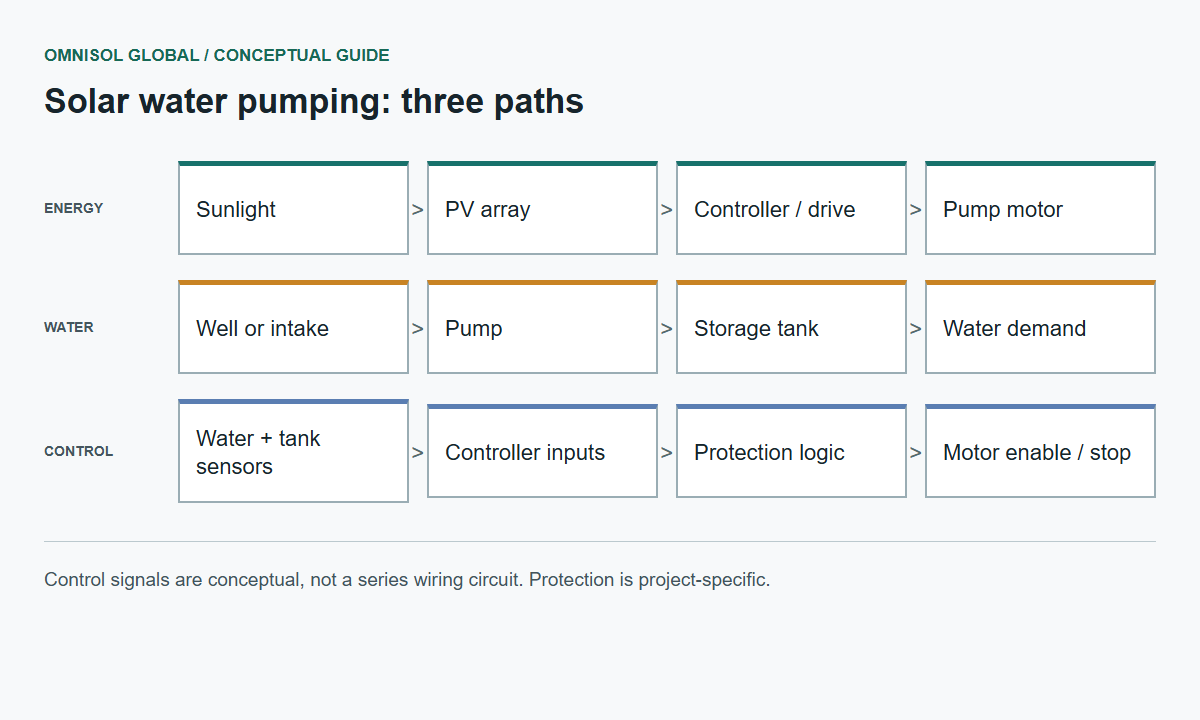
What each part does
| Part | Role |
|---|---|
| PV array | Supplies DC electricity; its output changes with irradiance, temperature and shading. |
| Controller or drive | Operates a compatible motor within its permitted electrical range and implements the specified protections. |
| Pump and pipework | Deliver flow against elevation, pressure and friction. The model curve must match the duty. |
| Water source and sensors | Source yield limits sustainable abstraction; appropriate sensing protects against low water and tank overflow. |
| Tank or backup supply | Bridges the difference between when water can be pumped and when it is needed. |
When solar pumping is a good fit
Start with the water requirement and the design month. A farm filling a tank for later irrigation has different requirements from a process needing constant pressure all night. Confirm source yield before increasing pumping capacity. Compare the whole system, including storage, distribution pressure and local maintenance access.
Cloud cover and high pumping head can reduce the hours when water is delivered. Do not assume that daylight hours are rated-output hours. Request a documented design-month yield assessment for the proposed pump, array and controller.
Photovoltaic pumping is not solar water heating
| System | Main purpose |
|---|---|
| Photovoltaic water pumping | Uses electrical energy from PV panels to move water for supply or irrigation. |
| Solar thermal circulation | Circulates a heat-transfer fluid or water in a heating system; its thermal design and equipment requirements differ. |
| Heat-pump water heating | Moves heat to heat water. It is not a synonym for a photovoltaic irrigation pump. |
Before requesting equipment
Prepare daily demand, pumping water level, outlet elevation or pressure, pipe dimensions, location and seasonal requirements. Then review pump sizing and connection architectures.
Background reading: World Bank: Solar Pumping 101. This overview is not model-specific performance evidence.
Solar water pump basics
What is a solar water pump?
A photovoltaic solar water pump uses electricity from solar panels to drive a motor that moves water. A complete system normally includes an array, a compatible controller or drive, a pump, hydraulic pipework and protection. It is different from a pump circulating fluid through a solar thermal water heater.
How does a solar water pump work?
Panels supply DC electricity. A compatible controller or solar pump drive manages that input for the motor, which drives the pump. The pump moves water from the source to an outlet or storage tank. Available flow depends on the pump curve, total dynamic head and available solar power.
Do solar powered water pumps work on cloudy days?
They may continue at reduced output, or stop if available power is insufficient for the required head or controller operating limits. A cloudy-day supply commitment needs a site-specific design, water storage or an approved backup arrangement; rated output is not an all-weather guarantee.
Are solar water pumps any good?
They can be a practical option for daytime or stored-water supply where the water source, seasonal solar resource and required duty align. Assess storage, seasonal demand, source yield, maintenance and local service before buying. Continuous pressure or night demand may require additional equipment or backup.
Does a solar water pump need a battery?
Not necessarily. A system can pump into a tank during daylight and draw stored water later. A tank must provide sufficient usable volume and delivery pressure for the application. Battery or hybrid supply is a separate design choice requiring compatible controls and protection.
Technical Guides
Need project-specific engineering support?
Free CAD layout, wind/snow load calculations, and BOM review included with project orders.