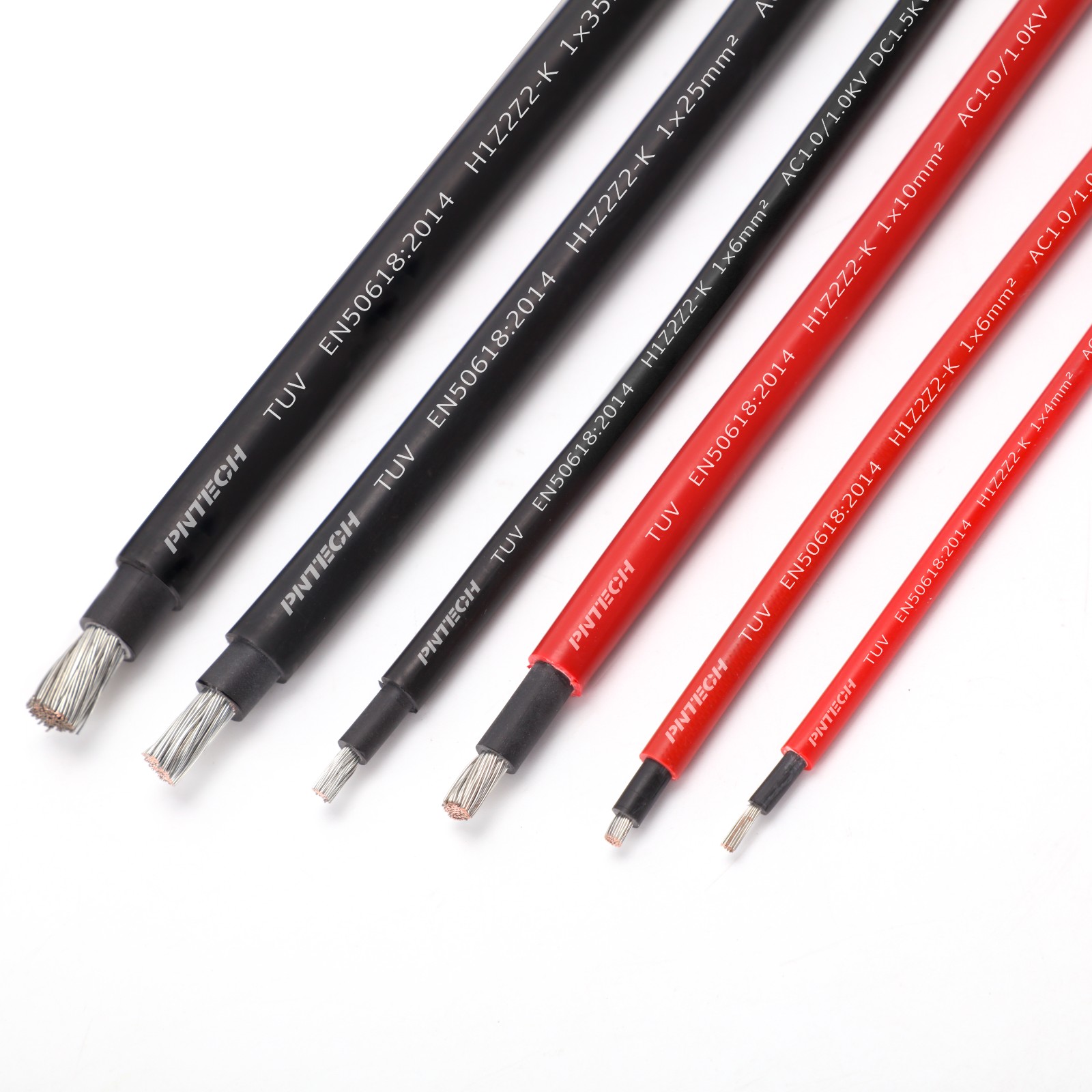
1500V DC Solar PV Cable (H1Z2Z2-K)
Why Quality Matters?
Cheap cables with poor insulation cause 30% of DC arc faults. Our e-beam cross-linked insulation withstands extreme UV and temperature fluctuations (-40°C to +90°C) without cracking.
Cross Section:
Color:
RFQ inputs
Quantity, destination, certificate needs.
QC proof
Inspection and document review before shipping.
Export ready
Packaging and mixed-container planning.
Procurement Snapshot
Commercial details are confirmed by SKU, quantity and destination at RFQ stage.
RFQ checklist
Send these points with your inquiry for faster pricing.
Documents to confirm
Often sourced together
Technical Data
Specification values for buyer review and RFQ matching
| Certification | TUV / CE / EN 50618 (H1Z2Z2-K) |
|---|---|
| Rated Voltage | 1500V DC (Max 1800V DC) |
| Insulation Material | XLPO (Electron-beam cross-linked) |
| Conductor Material | Stranded Tinned Copper (IEC 60228 Class 5) |
| Fire Performance | IEC 60332-1-2 (Flame Retardant) |
| Halogen Free | Yes (IEC 60754) |
| Expected Life | ≥ 25 Years |
Procurement & BOM Notes
How 1500V DC Solar PV Cable (H1Z2Z2-K) is sourced
OmniSol sources 1500V DC Solar PV Cable (H1Z2Z2-K) factory-direct as part of the Balance of System family, quoted against your project quantity, destination port and certification (TUV / CE / EN 50618 (H1Z2Z2-K)). Pricing and lead time are confirmed by SKU and order size at the RFQ stage, and OmniSol can propose a current-equivalent option if the exact variant is unavailable, so the line stays on schedule.
BOM fit
1500V DC Solar PV Cable (H1Z2Z2-K) is quoted as part of a complete project BOM so it can be consolidated with mounting, cable, protection and storage into one shipment, with one QC report and one document set instead of several separate orders.
Certification check
Confirm the 1500V DC Solar PV Cable (H1Z2Z2-K) certificates — TUV Rheinland certified to EN 50618 (H1Z2Z2-K) — certificate on request, IEC 62930 compliant — international recognition, Conductor: IEC 60228 Class 5 (flexible tinned copper), Fire performance: IEC 60332-1-2 (vertical flame propagation test), Halogen-free: IEC 60754 — no corrosive gases on combustion, UV aging: 3,300 hours per IEC 60811-401 — passed — and the inspection documents required for your destination market before ordering. OmniSol supplies the datasheet, certificate copy and inspection photos.
Product Overview
DC wiring is the highest-risk electrical subsystem in a photovoltaic installation. Unlike AC wiring, DC PV circuits cannot be interrupted by a simple breaker — current continues to flow as long as the panels are illuminated. A cable insulation failure in a DC string becomes a sustained arc fault that can reach 4,000°C and ignite adjacent materials within seconds. The specification of the cable insulation material is therefore a safety-critical decision.
OmniSol's 1500V DC solar cable uses XLPO (electron-beam cross-linked polyolefin) for both the inner insulation layer and the outer sheath. XLPO is formed by irradiating the base polymer with an electron beam, which creates covalent crosslinks between polymer chains. This process transforms a thermoplastic material into an elastomeric network that retains its mechanical and electrical properties across a temperature range of -40°C to +90°C and resists UV degradation without plasticizers.
The H1Z2Z2-K designation under EN 50618 defines the full technical specification: H1 (outdoor PV single-core cable), Z (XLPO insulation), 2Z (XLPO outer sheath), K (flexible stranded conductor). This designation allows procurement teams and site inspectors to verify the cable specification without reference to a brand-specific datasheet.
The cable is rated for 1500V DC system voltage, meeting the requirements of modern large-format string inverters and high-voltage DC architectures that reduce I²R losses in long string runs. All conductor sizes are available in black and red for positive/negative string identification in compliance with NEC 2014 and IEC 60364.
Applications
1500V DC PV string wiring from module junction boxes to string inverter DC inputs
Module-to-combiner box trunk runs on utility-scale and C&I projects
Replacement wiring for field repair of damaged DC circuits
Upgrade of existing 1000V system wiring to 1500V architecture
Offshore and coastal PV installations where XLPO sheath outperforms PVC in salt spray environments
Installation Notes
Maintain minimum bend radius of 4× the cable outer diameter at conduit entry points and junction boxes — tighter bends cause micro-cracking in the XLPO insulation that may not be immediately visible.
Use only a calibrated MC4-compatible crimp tool at the manufacturer's specified crimp force — verify each crimped connection passes the pull-out test (minimum 50N retention force) before deploying at height.
Secure cables to mounting rails using UV-stabilized nylon cable ties at maximum 300mm centres — cables in free span will chafe against rail edges under wind-induced oscillation, exposing the conductor.
Never mix cable sections from different manufacturers, voltage ratings, or conductor cross-sections within the same string — impedance discontinuities increase arc fault risk.
Certifications & Compliance
Frequently Asked Questions
What does the H1Z2Z2-K designation mean?
It is the European type designation under EN 50618. H1 = single-core outdoor PV cable; Z = XLPO inner insulation; 2Z = XLPO outer sheath; K = flexible stranded conductor. This designation is printed on the cable jacket and enables specification verification without brand reference.
Can a 1500V cable be used in a 1000V system?
Yes — a 1500V rated cable is fully suitable for 1000V systems and provides a higher safety margin against transient overvoltages. There is no performance disadvantage; the higher voltage rating reflects improved insulation thickness.
What cross-sections are available?
Standard stock is 4mm² (12AWG), 6mm² (10AWG), and 10mm² (8AWG). These cover the majority of residential and C&I string wiring applications. Contact OmniSol for other cross-sections.
Is the cable UV resistant?
Yes — the XLPO outer sheath passes 3,300 hours of UV aging testing per IEC 60811-401, equivalent to more than 25 years of outdoor exposure under EN 50618 conditions.
How should the cable be connected to MC4 connectors?
Strip 15mm of outer sheath and 8mm of insulation; insert into the IEC 62852 certified MC4 crimp contact; crimp at the specified force; inspect for conductor strand protrusion before inserting into the connector body. See the OmniSol MC4 Connector product page for compatible connectors and tooling.
Technical Guides
Products & Systems
Markets & Services
Need project-specific engineering support?
Free CAD layout, wind/snow load calculations, and BOM review included with project orders.
Related Products
More components from the same application category.
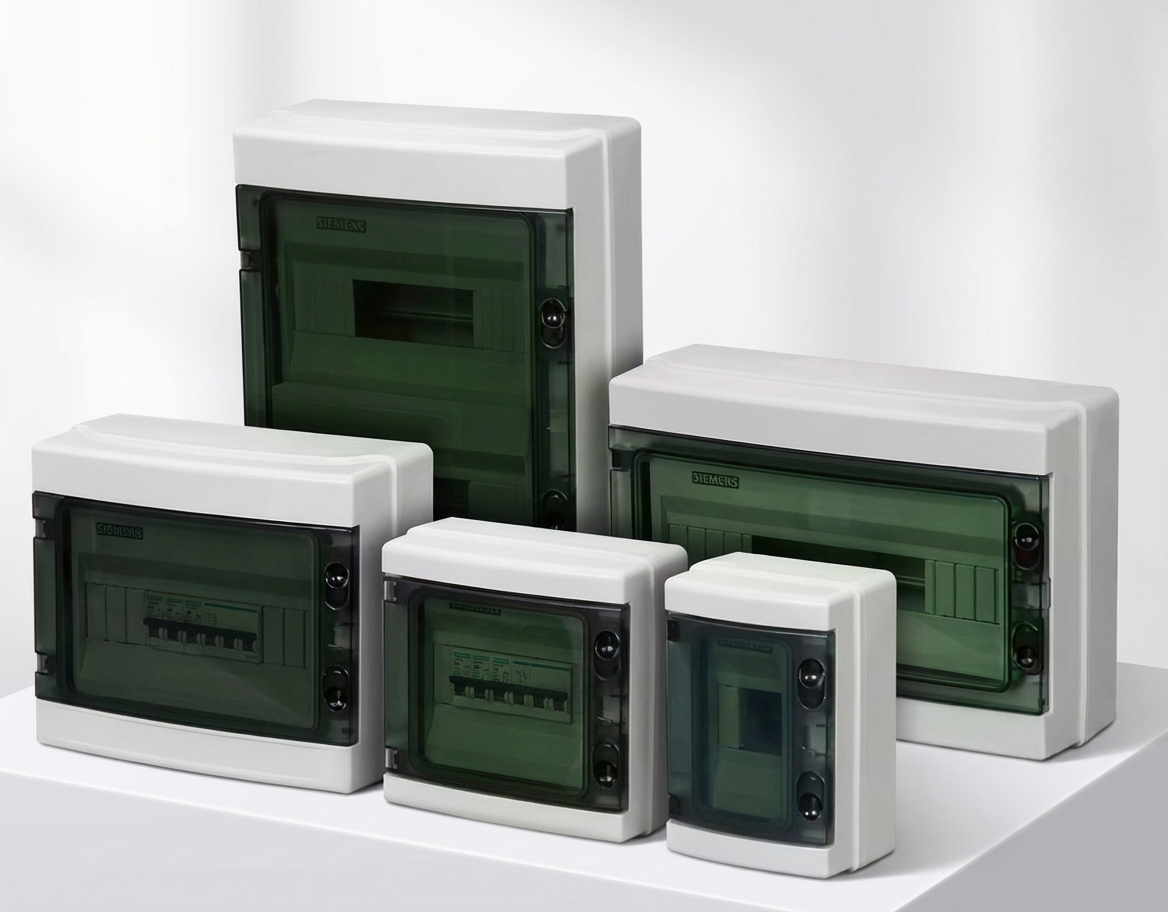
IP68 Split-Type PV Junction Box
High-reliability junction box with integrated Schottky bypass diodes. Designed to protect PV modules...
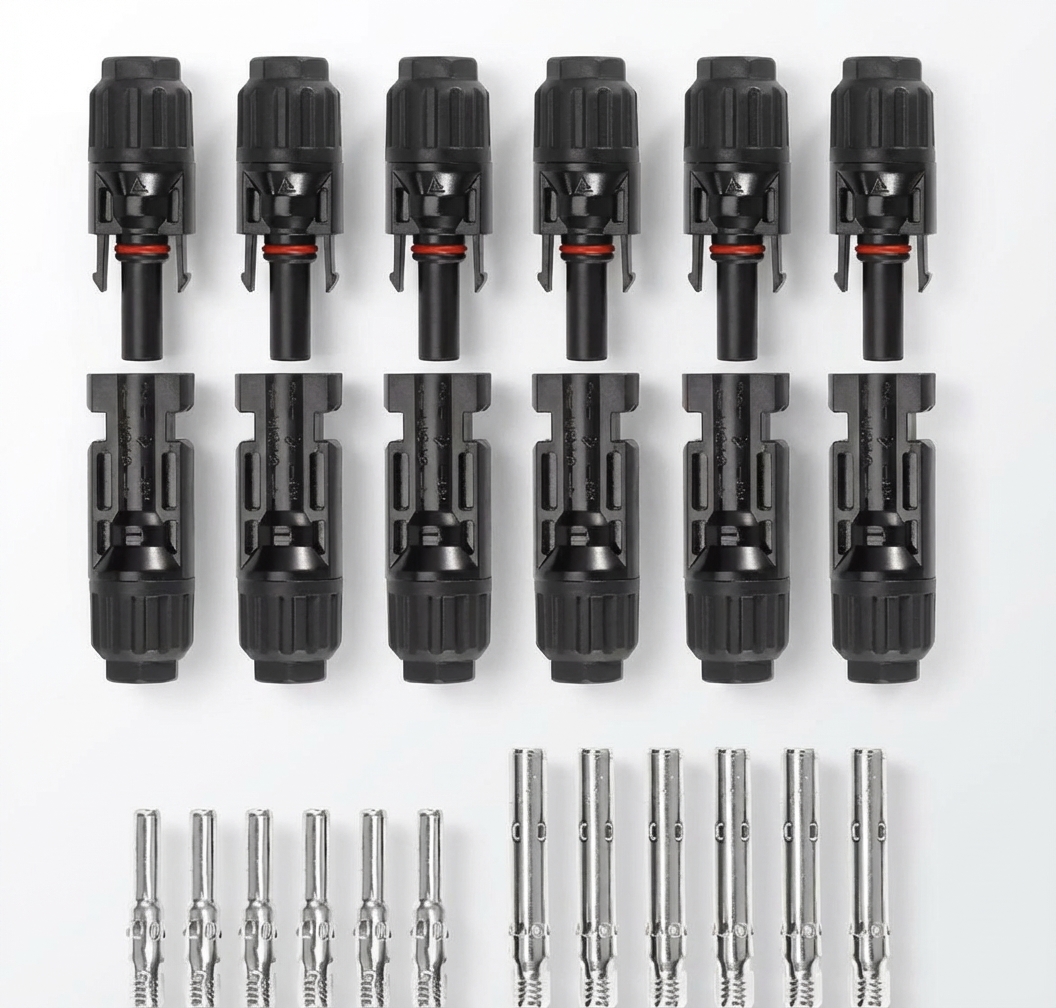
MC4 Compatible Solar Connectors
Industry-standard DC connector for PV systems. Features a self-locking mechanism and high-quality co...