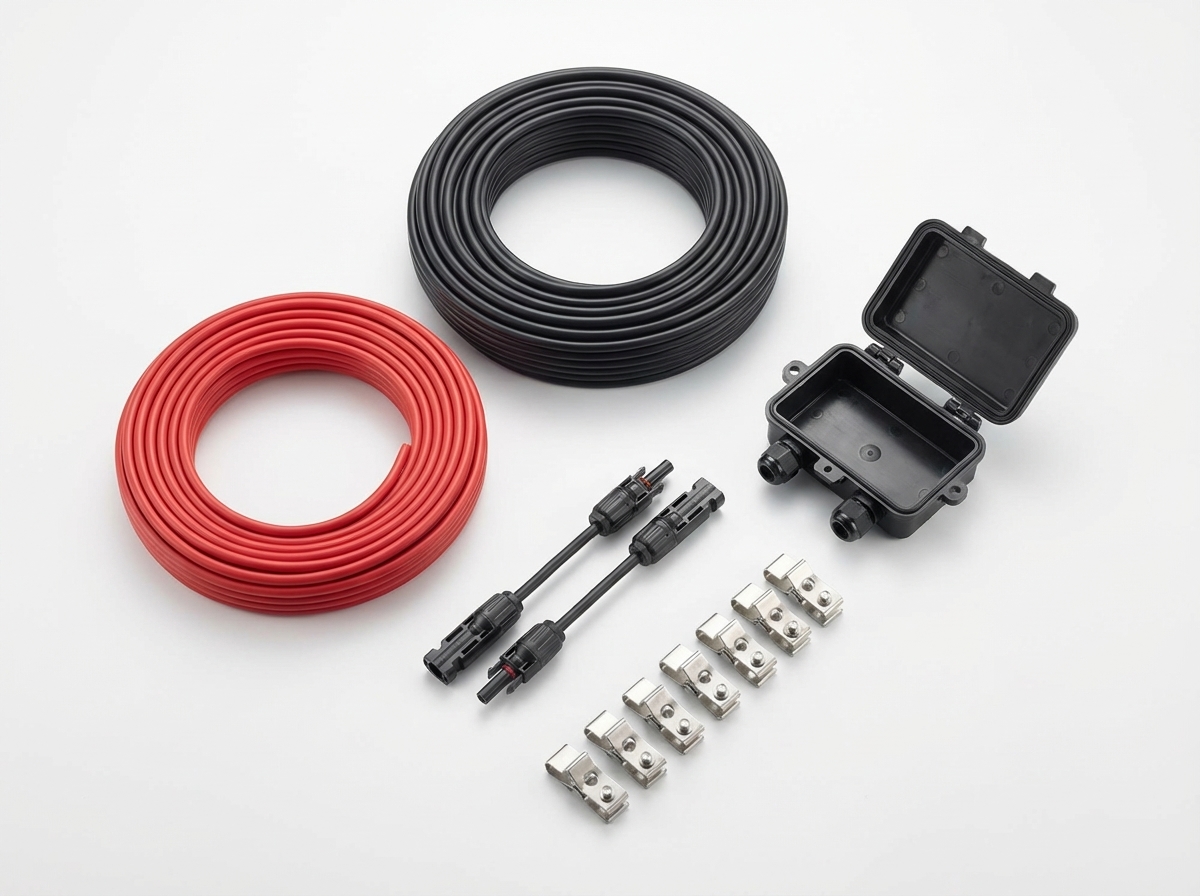
When a utility limits or forbids export (zero-export or non-export expansion), the expansion design changes: the question becomes which loads sit on backed-up circuits, how export is controlled, and what protection the new BOS needs.
This guide explains the BOS requirements so the RFQ carries the right data — it is general procurement guidance, not a substitute for a licensed electrical design.
Backed-up vs non-backed-up circuits
Expansion panels and batteries connect either to a backed-up subpanel (works during an outage) or to the main non-backed-up panel. The split decides inverter sizing, the transfer arrangement and how export is limited. Confirm which loads must stay live before sizing anything.
- Zero-export / export-limit control device or meter (CT) feedback
- Hybrid inverter capable of the backup/transfer mode required
- AC/DC protection sized to the new circuits
- Disconnects and labelling for the interconnection
Protection and disconnects
New DC strings need string protection and an isolator; the AC side needs breakers, possibly RCD/RCBO, an AC disconnect and SPD. The exact set depends on phase type and local rules — confirm before the order so nothing is missing at inspection.
Procurement decision table
| Decision area | Buyer question | Procurement check | Risk control |
|---|---|---|---|
| Product scope | Which product families does this cover? | Inverters, Energy Storage Batteries, AC Protection | Sizing expansion before confirming the export rule |
| Specification input | What must be stated before comparing quotes? | Export rule (zero-export / limited / allowed) | Use the same specification wording across supplier quotes. |
| Commercial input | What makes the quote operationally useful? | Backed-up loads vs non-backed-up loads | Tie quantity, packing and destination to the same RFQ line. |
| Quality gate | What should be checked before shipment? | Hybrid Inverter Sourcing Guide | Putting non-critical loads on the backup circuit |
BOM and RFQ context
Non-Export Solar Expansion: Battery & BOS Requirements is most useful when it is read as a sourcing decision, not only an informational article. The affected product scope normally includes Inverters, Energy Storage Batteries, AC Protection, DC Protection. A buyer should connect the answer to a live BOM, because cable size, connector rating, protection device choice, box configuration, storage accessories and export packing can change together.
For a procurement guide, the goal is to turn a broad buying question into a repeatable RFQ structure. The buyer should leave with the required product family, specification fields, quality checks and internal links needed to continue into the central products hub. In an RFQ, the minimum inputs should include Export rule (zero-export / limited / allowed), Backed-up loads vs non-backed-up loads, Existing inverter model and phase type, New panel/battery capacity to add. These inputs let a sourcing team compare suppliers on the same basis instead of only comparing unit price.
The related follow-up content is Hybrid Inverter Sourcing Guide, BOS 1500V Selection Guide, AC Protection Selection Guide. Use those pages to validate standards, sizing, inspection and packing before sending a final quote request. The main risk to avoid is: Sizing expansion before confirming the export rule Putting non-critical loads on the backup circuit
FAQ
What is non-export or zero-export solar?
It is a grid rule or setting that prevents the system from feeding power back to the grid, using an export-limit device or CT feedback to the inverter. Expansion under this rule focuses on self-consumption and backup rather than feed-in.
Should expansion panels go on backed-up or non-backed-up circuits?
It depends which loads must run during an outage. Critical loads go on the backed-up subpanel via the hybrid inverter; non-critical loads stay on the main panel. This split drives inverter sizing and the BOS protection list.
What BOS does a non-export expansion need?
Typically an export-limit/zero-export control, a compatible hybrid inverter, DC string protection and isolator, AC protection (breaker, RCD/RCBO, SPD) and an AC disconnect — sized to the new circuits and the local code.