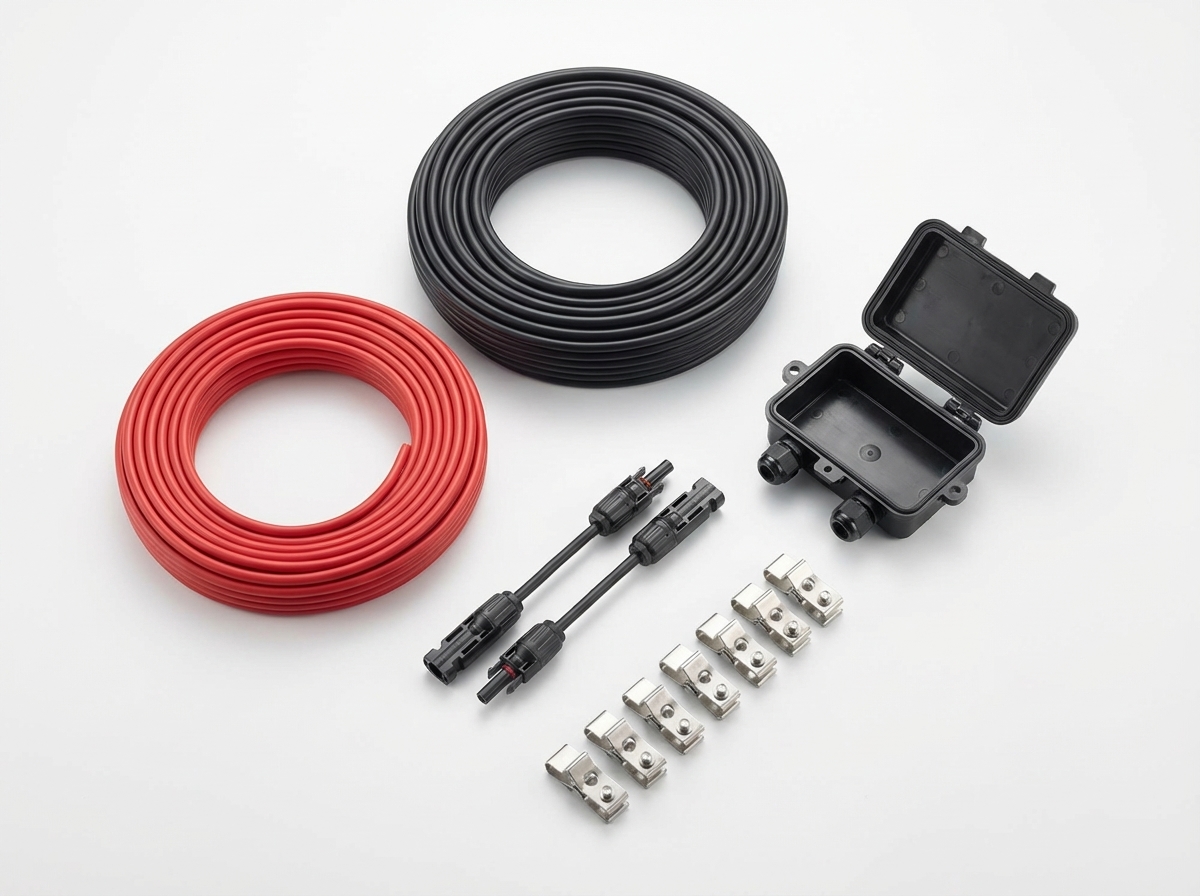
PV clamps (mid clamps, end clamps and seam/standing-seam clamps) are small parts with a high failure cost: the wrong alloy, a thin coating or a clamp that does not match the exact roof seam can fail under wind uplift. Verifying the clamp supplier is a specific case of factory verification.
Use this alongside the main verification pillar — confirm the factory is real first, then apply the clamp-specific checks below.
Clamp-specific points to verify
Clamps are sold by appearance more than any other mounting part, so the spec and test evidence matter. Confirm the material, the seam/profile compatibility and the rated capacity before comparing price.
- Alloy and temper: AL6005-T5 for aluminium clamps; SUS304/316 for fasteners
- Anodising or coating thickness stated with a test value, not just "anodised"
- Exact roof seam/profile match (Klip-Lok, Kalzip, trapezoidal) confirmed against the mould
- Rated clamp capacity (kN) and the wind load it was tested to
How a verified supplier quotes a clamp
A verified clamp supplier asks for the panel frame height and roof profile before quoting, supplies a drawing and a load value, and will send a sample to confirm fit. A supplier that quotes a clamp on a photo alone, with no profile or rating, is the higher risk.
PV clamp verification checklist
| Check | What to request | Pass signal |
|---|---|---|
| Material | Alloy/temper + fastener grade | AL6005-T5 body, SUS304/316 bolts, with material cert |
| Coating | Anodise/coating thickness value | Stated micron value + salt-spray report |
| Profile fit | Seam/profile + module frame height | Drawing and mould matched to your exact roof |
| Capacity | Rated clamp load (kN) | Load value referenced to AS/NZS 1170 / UL 2703 / EN |
| Sample | Pre-bulk sample | Supplier sends a sample to confirm fit |
OmniSol matches clamps to the exact roof profile and module frame from audited partner factories, with the load value and material certificate confirmed at RFQ.
Procurement decision table
| Decision area | Buyer question | Procurement check | Risk control |
|---|---|---|---|
| Product scope | Which product families does this cover? | Roof Mounting Systems, Solar Mounting Systems | Buying clamps on appearance without the profile match |
| Specification input | What must be stated before comparing quotes? | Roof seam/profile name and photo | Use the same specification wording across supplier quotes. |
| Commercial input | What makes the quote operationally useful? | Module frame height (30/35/40 mm) | Tie quantity, packing and destination to the same RFQ line. |
| Quality gate | What should be checked before shipment? | Verify Chinese Roof Hook & Mounting Factories | Accepting "anodised" with no thickness value |
BOM and RFQ context
Verified PV Clamp Suppliers in China: Buyer Checklist is most useful when it is read as a sourcing decision, not only an informational article. The affected product scope normally includes Roof Mounting Systems, Solar Mounting Systems. A buyer should connect the answer to a live BOM, because cable size, connector rating, protection device choice, box configuration, storage accessories and export packing can change together.
For a procurement guide, the goal is to turn a broad buying question into a repeatable RFQ structure. The buyer should leave with the required product family, specification fields, quality checks and internal links needed to continue into the central products hub. In an RFQ, the minimum inputs should include Roof seam/profile name and photo, Module frame height (30/35/40 mm), Required alloy and fastener grade, Coating thickness and salt-spray needs. These inputs let a sourcing team compare suppliers on the same basis instead of only comparing unit price.
The related follow-up content is Verify Chinese Roof Hook & Mounting Factories, Solar Hook Factory Certification Checklist, Solar Mounting Standards Guide. Use those pages to validate standards, sizing, inspection and packing before sending a final quote request. The main risk to avoid is: Buying clamps on appearance without the profile match Accepting "anodised" with no thickness value
FAQ
How do I verify a PV clamp before ordering?
Confirm the alloy and temper (AL6005-T5 body, SUS304/316 fasteners), the coating thickness with a salt-spray report, the exact roof seam or module-frame match, and the rated clamp load with the wind standard it was tested to. Request a sample to confirm fit before bulk.
Are seam clamps interchangeable between different metal roofs?
No. A clamp is designed for a specific seam geometry; forcing the wrong clamp can deform a thin-gauge seam or fail under wind uplift. Provide the roof profile name (Klip-Lok, Kalzip, trapezoidal) and the module frame height, and match the mould before ordering.
What load rating should a PV clamp have?
The clamp must resist the per-clamp uplift from your wind zone — often 1–3 kN per clamp, and higher at array edges and corners. Ask for the rated capacity referenced to AS/NZS 1170.2, UL 2703 or EN 1991-1-4.