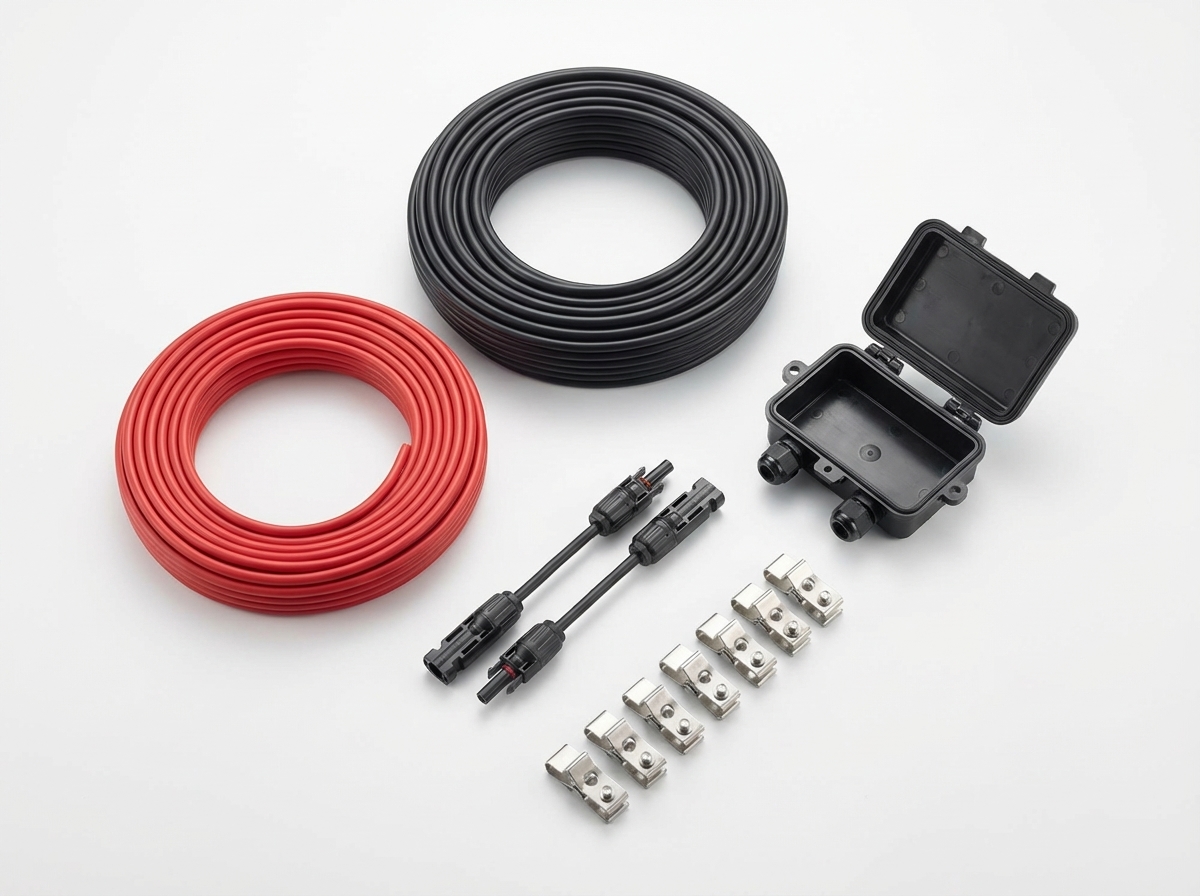
A combiner box is an assembled product, so its quality is decided by the build, not the catalog photo. Two boxes to the same spec can pass or fail in the field depending on the component brands fitted, the torque on the terminals and whether the enclosure actually meets its IP rating. Pre-shipment inspection is where that is caught — or missed.
This is a working pre-shipment QC checklist for combiner boxes: what to inspect, and the acceptance criterion for each, so a bulk order is verified against the spec before it leaves the factory.
Inspect against the confirmed spec, not a generic standard
QC starts from the agreed internal BOM and wiring diagram. The inspection confirms that what was built matches what was specified — the fuse rating, the SPD type, the isolator/MCCB, the busbar and the enclosure — because the most common combiner failure is a substituted internal component, not a manufacturing defect.
The four inspection areas
A combiner QC pass covers the enclosure, the internal components, the wiring and workmanship, and the documents.
- Enclosure: IP rating, material, gland layout, mounting and sealing
- Internals: fuse rating, SPD type, isolator/MCCB and busbar match the BOM and brands
- Wiring: torque, labelling, polarity, clearances, no exposed conductor
- Documents: certificate numbers verifiable; ratings on labels match the spec
Sampling and what a failure means
On a bulk order, inspect a sample across the batch, not one unit. A failure on a rating or certificate is a hold, not a note — a 1000V SPD fitted in a 1500V box, or an unverifiable certificate, stops the shipment until corrected, because it is a safety and inspection problem at the destination.
Combiner box pre-shipment QC checklist
| Check | What to verify | Acceptance criterion |
|---|---|---|
| Enclosure IP | Rating + sealing + glands | Meets specified IP (e.g. IP65/66), sealed |
| String fuses | Rating + count + brand | gPV, matches BOM rating and string count |
| SPD | Type + voltage (Ucpv) | Type per BOM; Ucpv > system voltage |
| Isolator / MCCB | Rating + brand | Load-break rated to combined current/voltage |
| Busbar | Current rating | Above total combined string current |
| Wiring / torque | Torque, labels, polarity | To spec; labelled; no exposed conductor |
| Certificates | Numbers verifiable | IEC/UL numbers match the components |
OmniSol runs pre-shipment QC on combiner boxes against the confirmed internal BOM and wiring diagram before release — substituted components and certificate gaps are a hold, not a note.
Procurement decision table
| Decision area | Buyer question | Procurement check | Risk control |
|---|---|---|---|
| Product scope | Which product families does this cover? | Solar Combiner Boxes, DC Protection, 1500V DC Combiner Box | Inspecting against a generic standard instead of the confirmed BOM |
| Specification input | What must be stated before comparing quotes? | Enclosure IP rating and sealing | Use the same specification wording across supplier quotes. |
| Commercial input | What makes the quote operationally useful? | String fuse rating + count vs BOM | Tie quantity, packing and destination to the same RFQ line. |
| Quality gate | What should be checked before shipment? | Solar Combiner Box BOM for EPC | Accepting substituted internal components |
BOM and RFQ context
Combiner Box Quality Inspection Checklist (Pre-Shipment) is most useful when it is read as a sourcing decision, not only an informational article. The affected product scope normally includes Solar Combiner Boxes, DC Protection, 1500V DC Combiner Box. A buyer should connect the answer to a live BOM, because cable size, connector rating, protection device choice, box configuration, storage accessories and export packing can change together.
For a procurement guide, the goal is to turn a broad buying question into a repeatable RFQ structure. The buyer should leave with the required product family, specification fields, quality checks and internal links needed to continue into the central products hub. In an RFQ, the minimum inputs should include Enclosure IP rating and sealing, String fuse rating + count vs BOM, SPD type and Ucpv vs system voltage, Isolator/MCCB and busbar rating. These inputs let a sourcing team compare suppliers on the same basis instead of only comparing unit price.
The related follow-up content is Solar Combiner Box BOM for EPC, Solar Combiner Box Guide, Solar BOS RFQ Checklist. Use those pages to validate standards, sizing, inspection and packing before sending a final quote request. The main risk to avoid is: Inspecting against a generic standard instead of the confirmed BOM Accepting substituted internal components
FAQ
What is checked in a combiner box pre-shipment inspection?
Four areas against the confirmed BOM: the enclosure (IP rating, sealing, glands), the internals (fuse rating, SPD type, isolator/MCCB, busbar and component brands), the wiring (torque, labelling, polarity, clearances), and the documents (certificate numbers verifiable, label ratings matching the spec).
Why inspect a combiner box if it is built to spec?
Because the most common combiner failure is a substituted internal component or an enclosure that does not actually meet its IP rating — neither shows on the catalog photo. Inspection confirms the built box matches the agreed internal BOM and wiring diagram.
What counts as a QC failure on a combiner box?
A rating or certificate mismatch is a hold: a 1000V-rated SPD or fuse in a 1500V box, an enclosure that fails its IP rating, or a certificate number that cannot be verified. These are safety and inspection problems at the destination, so the shipment stops until corrected.
Should I inspect every combiner or a sample?
On a bulk order, inspect a sample across the batch rather than a single unit, covering the four areas. Critical, high-consequence items (voltage-class ratings, certificates) should be checked thoroughly because a single mismatch can fail inspection at the destination.