Direct answer
Armored solar cable is used when PV cable routes need stronger mechanical protection than standard single-core solar cable can provide.
This is not a default replacement for normal string cable. It should be selected for exposed sections, underground route risk, mechanical impact or project-specific protection needs.
Core procurement parameters
| Cable type | Armored PV cable / armored DC cable |
|---|---|
| Use case | Exposed or mechanically risky cable routes |
| Voltage class | Project-specific 1000V / 1500V DC review |
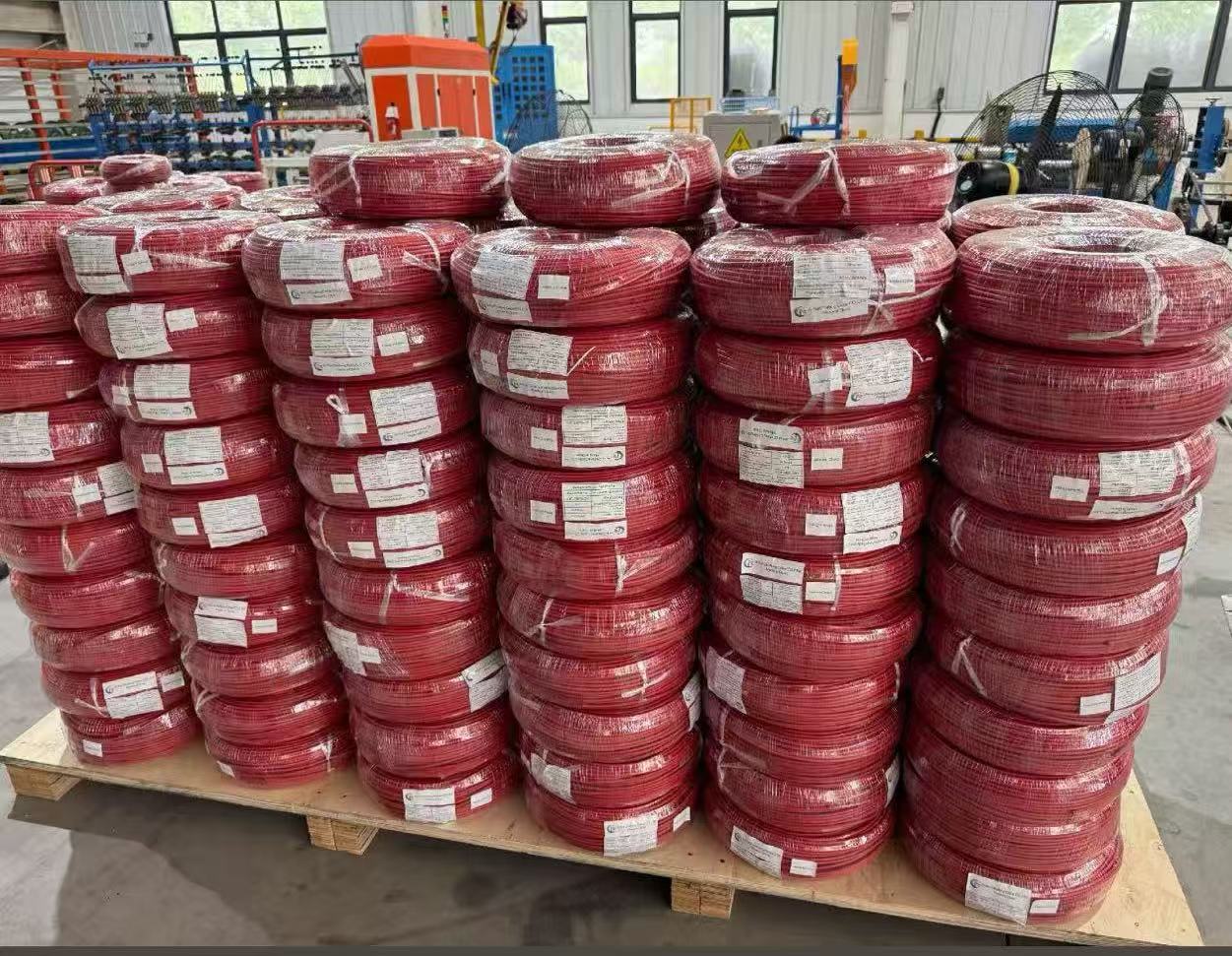
| Packing | Heavy reels or palletized export packing |
Applications
- Utility PV plants
- Ground-mounted projects
- Exposed cable corridors
- Projects with mechanical protection requirements
Available options
- Armored H1Z2Z2-K family
- Custom cable length
- Project marking
- Route-based packing labels
QC points before shipment
BOM procurement notes
Armored Solar Cable for PV Plants should be treated as part of a procurement BOM, not as an isolated catalogue item. The usual starting points are cable type (Armored PV cable / armored DC cable), use case (Exposed or mechanically risky cable routes), voltage class (Project-specific 1000V / 1500V DC review). Typical use cases include Utility PV plants, Ground-mounted projects, Exposed cable corridors. PV cable should be checked together with connector range, string current, run length, voltage drop target, reel length, color split and the downstream combiner or inverter input. A cable-only quote can look simple, but the final BOM usually depends on whether the project is residential, C&I or utility scale.
A practical RFQ should describe the required variant, quantity and packing in the same language the site team will use later. For this page, the common option set includes Armored H1Z2Z2-K family, Custom cable length, Project marking. The RFQ checklist should cover Cable route condition, Required size, Voltage class, Total length so the quote can be compared across suppliers without hidden assumptions.
For cable pages, the commercial check is normally standard wording, printed marking, conductor construction, insulation and sheath material, voltage class and batch documentation. The same item may need different certificate wording for Europe, Australia, the Middle East or distributor stock. Before shipment, the inspection record should include Check armor construction; Confirm bending radius; Inspect sheath marking. This gives EPC buyers and distributors a cleaner handover from sourcing to receiving, especially when the order is consolidated with other BOS lines from the central products hub.
FAQ
When is armored solar cable necessary?
It is used when mechanical risk, route exposure or project rules require stronger protection than standard PV cable.
Can armored cable be included with standard PV cable in one shipment?
Yes, but reel weight, loading sequence and unloading equipment should be planned before shipment.