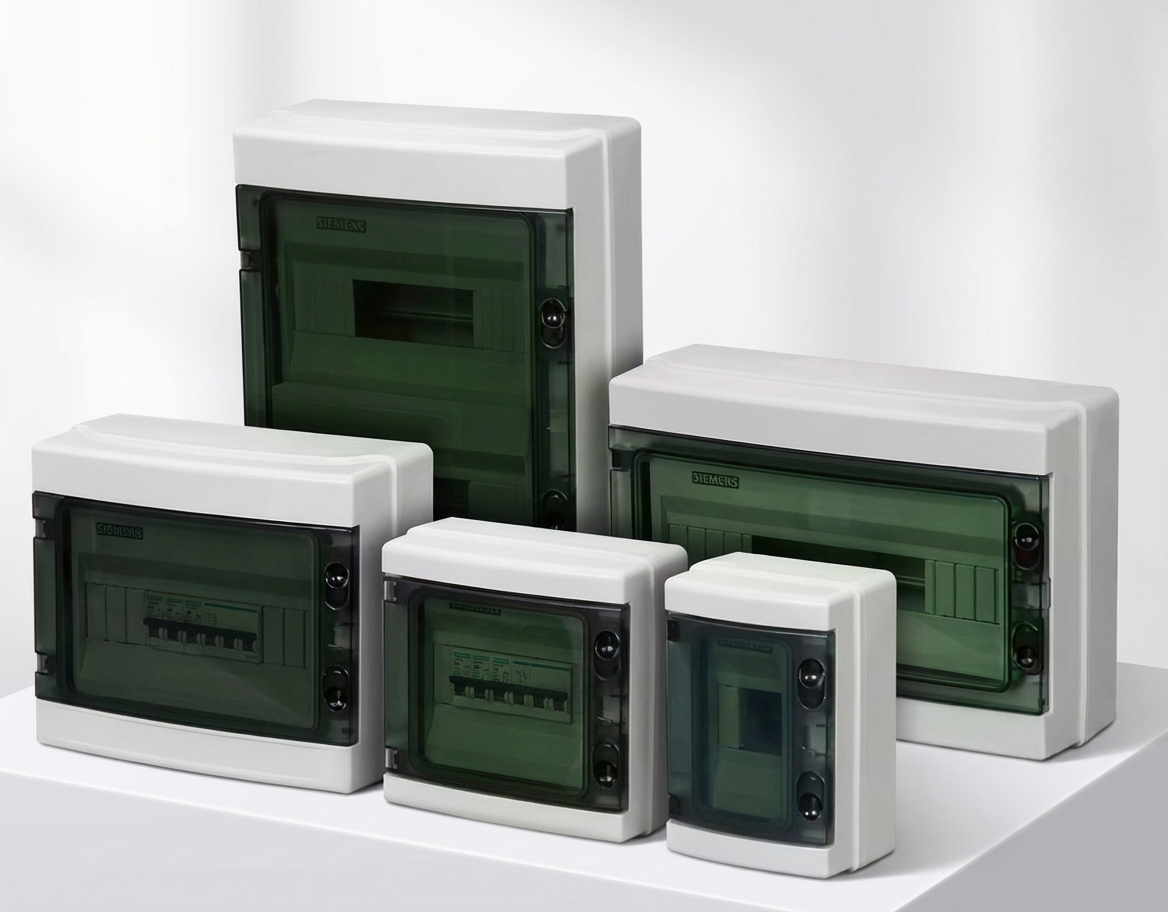
The move from 1000V to 1500V DC architecture lowered balance-of-system cost for commercial and utility solar by running longer strings — but it changed every protection component on the DC side. A 1000V-rated isolator, fuse, SPD or combiner is not a valid substitute in a 1500V system, even if it physically fits.
This guide explains what actually changes between the two voltage classes across the DC protection set, and how to specify and source the correct class so nothing in the chain is under-rated.
Why voltage class matters more than it looks
Every DC protection device has a maximum rated DC voltage. Above it, insulation clearances, arc-suppression and creepage distances are no longer guaranteed — which is a safety and fire issue, not a margin one. Because a string of modules can sit well above its nominal voltage in cold, bright conditions, the components must be rated for the system's maximum, which is why 1000V and 1500V parts are designed and certified separately.
What changes component by component
The same five DC protection items exist in both classes, but the rating, internal construction and often the physical size differ.
- DC isolator / disconnect: 1500V switches use larger arc chambers and more poles in series to break the higher voltage
- DC fuses: gPV fuses are class-rated; a 1000V fuse cannot protect a 1500V string
- SPD: the Ucpv (max continuous operating voltage) must exceed the system voltage — 1500V SPDs have a higher Ucpv
- DC breaker / MCCB: breaking capacity and rated voltage are higher; construction is heavier
- Combiner internals: all of the above inside a 1500V-rated enclosure with greater clearances
When you use each class
1000V DC remains common on residential and smaller commercial systems; 1500V is the default for modern C&I and utility-scale blocks because longer strings cut conductor, combiner and labour cost per watt. The decision is set by the system design and the inverter, and then every DC protection component must follow it — there is no partial mixing.
How often is the voltage class actually stated? (export data)
It is stated far less often than the risk warrants. In 785 combiner box export records from Chinese suppliers between January 2025 and July 2026, only 57 mention 1000V and 13 mention 1500V — the remaining ~90% carry no voltage class in the product description at all.
Shipping paperwork is not an engineering document, so that alone is not proof of a specification failure. But it matches what shows up at quotation stage: the voltage class is often the last parameter pinned down, and sometimes it is only ever inferred from the inverter choice. That inference is precisely how 1000V-rated internals reach a 1500V array. Method note: the dataset covers only shipments described as "combiner box", so utility-scale equipment described as "array box" or "string box" is under-represented.
Specifying and sourcing the right class
State the system DC voltage class once, at the top of the RFQ, and require every DC protection line item to carry a certificate at that class. The most common sourcing error is a 1500V design with one or two 1000V-rated parts slipped in to save cost.
- System maximum DC voltage stated and applied to every device
- Each item's certificate (IEC 60947 / UL) confirms the voltage class with a verifiable number
- SPD Ucpv above the system voltage; fuses gPV class-rated to the class
- No mixing of 1000V and 1500V parts in the same string or box
1000V vs 1500V DC BOS components at a glance
| Component | 1000V system | 1500V system | Interchangeable? |
|---|---|---|---|
| PV cable (H1Z2Z2-K) | Rated 1.5kV DC (covers 1000V) | Rated 1.5kV DC | Usually yes — most H1Z2Z2-K is already 1.5kV rated |
| Connectors (MC4) | 1000V-rated | 1500V-rated | No — connector rating must match |
| DC isolator/disconnect | ≤1000V DC rated | ≤1500V DC rated, larger arc chamber | No |
| DC fuse (gPV) | 1000V class | 1500V class | No |
| SPD | Ucpv > 1000V | Ucpv > 1500V | No |
| DC breaker / MCCB | 1000V rated | 1500V rated, higher breaking capacity | No |
| Combiner box | 1000V internals, std clearances | 1500V internals, greater clearances | No |
OmniSol supplies the full DC BOS — cable, connectors, DC protection and combiner boxes — certified to your exact voltage class from audited partner factories, with the IEC / UL certificate and a sample confirmed at the RFQ stage.
Procurement decision table
| Decision area | Buyer question | Procurement check | Risk control |
|---|---|---|---|
| Product scope | Which product families does this cover? | DC Protection (all), Combiner Boxes, PV Cables | Mixing 1000V and 1500V parts in one string or box |
| Specification input | What must be stated before comparing quotes? | System maximum DC voltage class (1000V / 1500V) | Use the same specification wording across supplier quotes. |
| Commercial input | What makes the quote operationally useful? | Isolator/disconnect rated to the class | Tie quantity, packing and destination to the same RFQ line. |
| Quality gate | What should be checked before shipment? | DC Protection Selection Guide | Reusing a 1000V SPD/fuse in a 1500V design |
BOM and RFQ context
1000V vs 1500V DC BOS: What Changes Across Cable, Connectors, Protection & Combiner is most useful when it is read as a sourcing decision, not only an informational article. The affected product scope normally includes DC Protection (all), Combiner Boxes, PV Cables, Connectors. A buyer should connect the answer to a live BOM, because cable size, connector rating, protection device choice, box configuration, storage accessories and export packing can change together.
For a comparison page, the value is in showing when each option is suitable, not declaring one universal winner. The practical choice depends on voltage class, current rating, installation environment, certificate requirements and the rest of the BOS package. In an RFQ, the minimum inputs should include System maximum DC voltage class (1000V / 1500V), Isolator/disconnect rated to the class, gPV fuses class-rated, SPD Ucpv above the system voltage. These inputs let a sourcing team compare suppliers on the same basis instead of only comparing unit price.
The related follow-up content is DC Protection Selection Guide, Solar DC Disconnect & Isolator Guide, DC MCB vs DC MCCB. Use those pages to validate standards, sizing, inspection and packing before sending a final quote request. The main risk to avoid is: Mixing 1000V and 1500V parts in one string or box Reusing a 1000V SPD/fuse in a 1500V design
FAQ
Can I use 1000V DC protection components in a 1500V solar system?
No. Isolators, fuses, SPD, breakers and combiner internals are voltage-class rated. A 1000V-rated part in a 1500V system exceeds its insulation, arc-suppression and creepage design — a safety and fire risk — even if it physically fits. Use components certified to the system voltage class.
What is the real difference between 1000V and 1500V DC components?
Higher rated DC voltage, larger arc chambers and clearances, higher SPD Ucpv, higher fuse and breaker class, and often a larger physical size. The 1500V parts are designed and certified separately to handle the higher voltage that longer strings produce.
Why did the industry move to 1500V?
Running strings at 1500V instead of 1000V allows longer strings, which reduces the number of strings, conductors, combiner inputs and labour per watt — lowering balance-of-system cost on commercial and utility projects. It is now the default for modern C&I and utility blocks.
How do I make sure my DC protection BOM is all the right voltage class?
State the system maximum DC voltage once at the top of the RFQ, require every DC protection line item to carry an IEC 60947 / UL certificate at that class with a verifiable number, confirm the SPD Ucpv exceeds the system voltage, and check that no 1000V part has been mixed into a 1500V box to save cost.