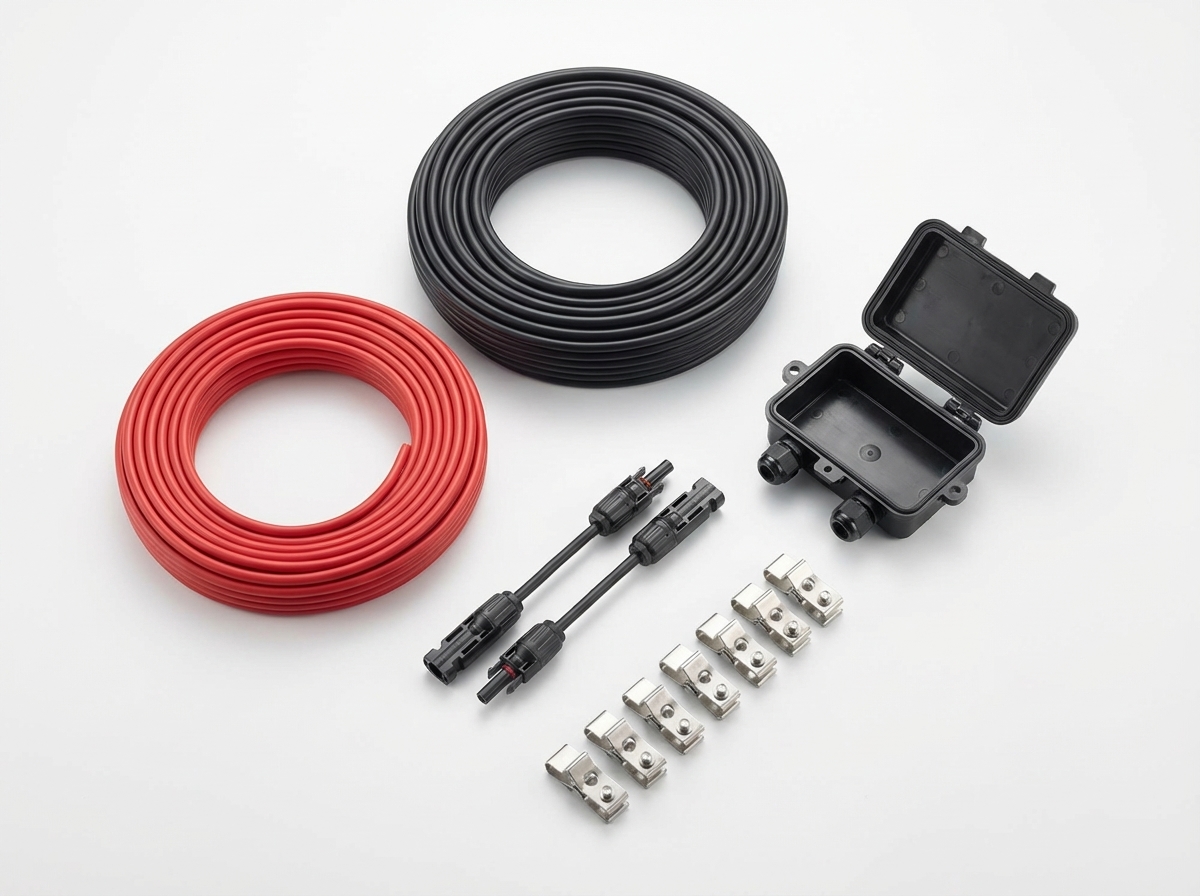
Copper-wire theft is a recurring problem on utility solar sites, and the procurement choices made up front — conductor type, conduit, combiner placement, labelling — materially change the exposure.
This guide lists the BOS specification and site measures that reduce theft risk, framed as a utility-scale BOM input.
Procurement choices that reduce exposure
Aluminium-alloy DC cable on long runs has lower scrap value than copper and reduces the incentive. Buried or armoured conduit, combiner boxes placed for visibility, and tamper-evident labelling all raise the effort required. These are specification decisions, not afterthoughts.
- Aluminium-alloy conductor on long DC home runs where suitable
- Armoured or buried conduit for exposed runs
- Combiner placement for visibility and monitoring
- Tamper-evident labelling and string monitoring
Site and monitoring measures
Beyond the BOM, string-level monitoring flags a sudden loss, and clear labelling plus secured enclosures slow removal. Plan these with the electrical BOS so the order is coherent.
Theft-prevention measure → BOM item
| Measure | BOM item | Note |
|---|---|---|
| Lower scrap value | Aluminium-alloy DC cable | Where ampacity/standard allows |
| Harden runs | Armoured / buried conduit | For exposed home runs |
| Visibility | Combiner box placement + enclosure | Monitorable, secured |
| Detection | String monitoring device | Flags sudden loss |
| Deterrence | Tamper-evident labels | Slows removal/resale |
Indicative utility-scale measures. OmniSol can quote the cable, conduit, combiner and monitoring as one consolidated BOS order.
Procurement decision table
| Decision area | Buyer question | Procurement check | Risk control |
|---|---|---|---|
| Product scope | Which product families does this cover? | PV Cables, Combiner Boxes, DC Protection | Specifying copper everywhere by default on long runs |
| Specification input | What must be stated before comparing quotes? | Site size and DC home-run lengths | Use the same specification wording across supplier quotes. |
| Commercial input | What makes the quote operationally useful? | Conductor choice (copper vs aluminium-alloy) | Tie quantity, packing and destination to the same RFQ line. |
| Quality gate | What should be checked before shipment? | BOS 1500V Selection Guide | Exposed unconduited home runs |
BOM and RFQ context
Solar Farm Copper Theft Prevention: BOM & Site Measures is most useful when it is read as a sourcing decision, not only an informational article. The affected product scope normally includes PV Cables, Combiner Boxes, DC Protection. A buyer should connect the answer to a live BOM, because cable size, connector rating, protection device choice, box configuration, storage accessories and export packing can change together.
For a procurement guide, the goal is to turn a broad buying question into a repeatable RFQ structure. The buyer should leave with the required product family, specification fields, quality checks and internal links needed to continue into the central products hub. In an RFQ, the minimum inputs should include Site size and DC home-run lengths, Conductor choice (copper vs aluminium-alloy), Conduit type and burial, Combiner placement and enclosure security. These inputs let a sourcing team compare suppliers on the same basis instead of only comparing unit price.
The related follow-up content is BOS 1500V Selection Guide, PV Cable Sizing Guide, Combiner Box Selection Guide. Use those pages to validate standards, sizing, inspection and packing before sending a final quote request. The main risk to avoid is: Specifying copper everywhere by default on long runs Exposed unconduited home runs