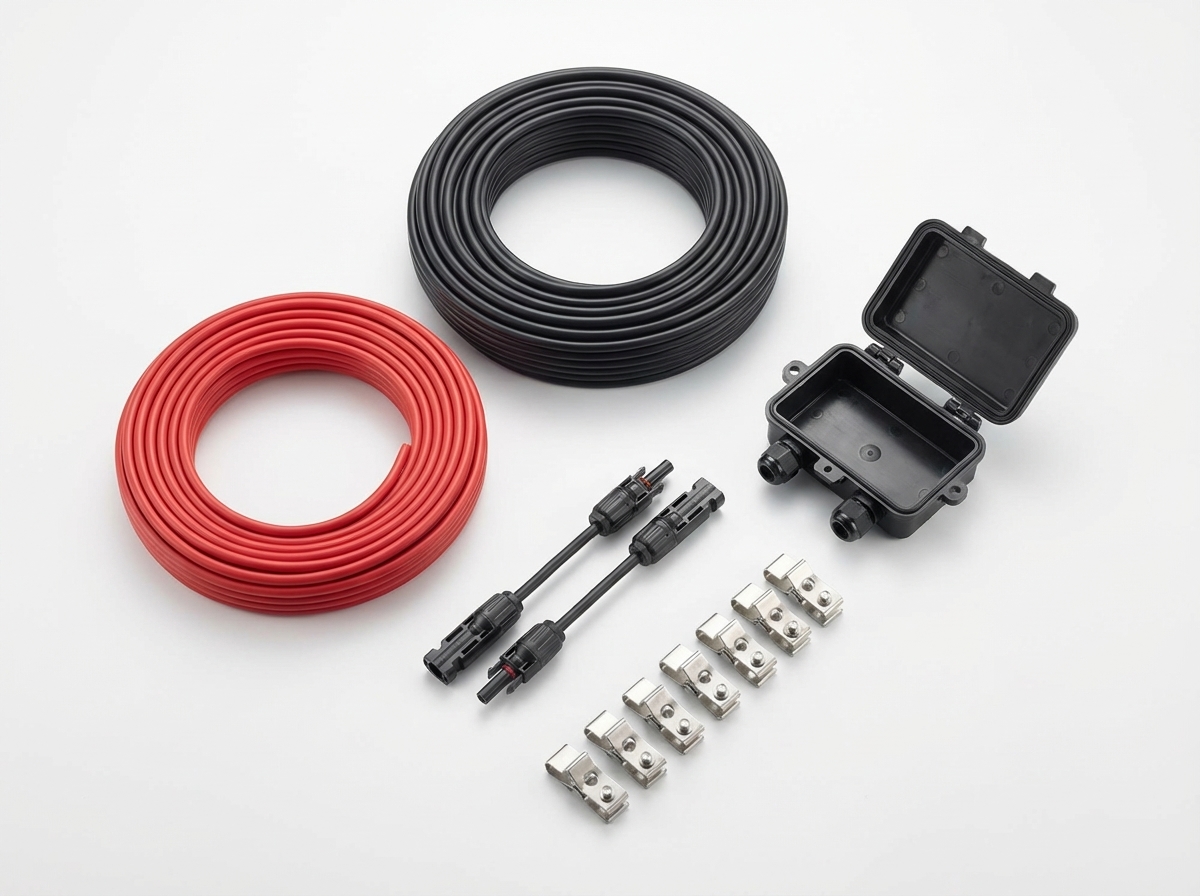
A mixed BOS container can reduce logistics friction when product families, carton labels, pallet plan and inspection photos are prepared before loading.
The key is to group items by project zone or product family so receiving teams can identify goods quickly.
How buyers should read this
Heavy rails, cable rolls, electrical cartons and battery goods need different packing logic.
- Packing list by family
- Pallet labels
- QC photos
- Container loading photos
- Document review
RFQ notes
For a faster quote, send the project country, system voltage, expected quantity, required documents and any packing or label requirements with the first inquiry.
Procurement decision table
| Decision area | Buyer question | Procurement check | Risk control |
|---|---|---|---|
| Product scope | Which product families does this cover? | PV Cables, Connectors, DC Protection | Buying only by product name |
| Specification input | What must be stated before comparing quotes? | Packing list by family | Use the same specification wording across supplier quotes. |
| Commercial input | What makes the quote operationally useful? | Pallet labels | Tie quantity, packing and destination to the same RFQ line. |
| Quality gate | What should be checked before shipment? | Solar BOS Packing & Labeling Guide | Leaving voltage or rating undefined |
BOM and RFQ context
Mixed Container Solar BOS Shipping Guide is most useful when it is read as a sourcing decision, not only an informational article. The affected product scope normally includes PV Cables, Connectors, DC Protection, Distribution Boards. A buyer should connect the answer to a live BOM, because cable size, connector rating, protection device choice, box configuration, storage accessories and export packing can change together.
For a procurement guide, the goal is to turn a broad buying question into a repeatable RFQ structure. The buyer should leave with the required product family, specification fields, quality checks and internal links needed to continue into the central products hub. In an RFQ, the minimum inputs should include Packing list by family, Pallet labels, QC photos, Container loading photos. These inputs let a sourcing team compare suppliers on the same basis instead of only comparing unit price.
The related follow-up content is Solar BOS Packing & Labeling Guide. Use those pages to validate standards, sizing, inspection and packing before sending a final quote request. The main risk to avoid is: Buying only by product name Leaving voltage or rating undefined