Direct answer
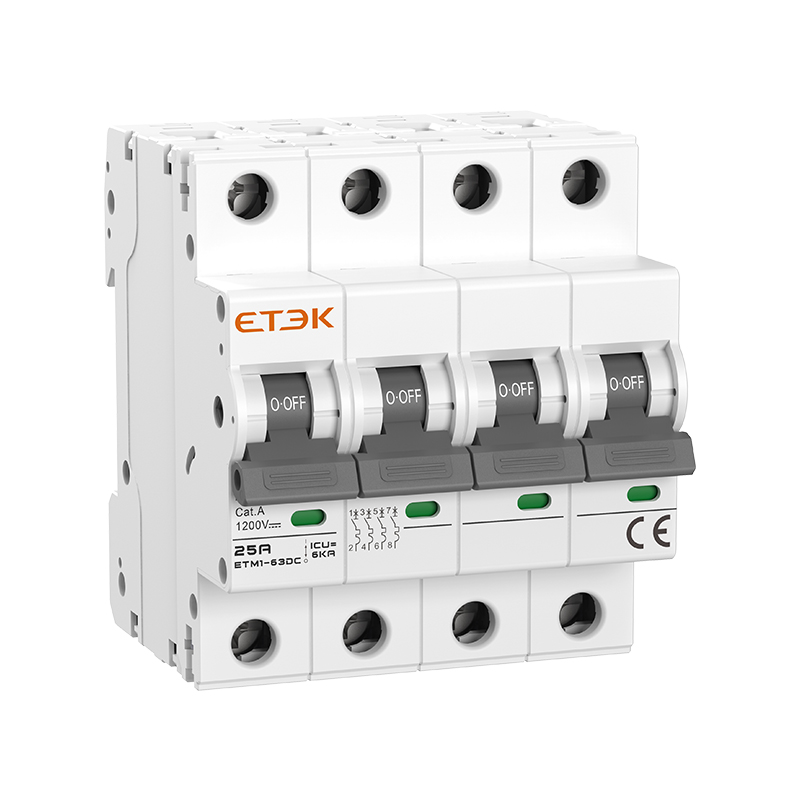
A DC isolator switch provides manual disconnection for PV DC circuits. It is selected by voltage, current, pole configuration, enclosure rating and installation position.
Isolator requirements vary by market and project practice, so the quote should state whether the device is loose, enclosed or built into a combiner box.
Core procurement parameters
| Voltage class | 1000V / 1500V DC options |
|---|---|
| Current rating | Project-specific according to string or output current |
| Mounting | Loose device, IP enclosure, or combiner assembly |
| Use position | Inverter input, combiner input/output, DC distribution |
Applications
- PV inverter isolation
- Combiner box switching
- Rooftop DC disconnects
- C&I maintenance isolation
Available options
- Enclosed isolator
- Panel-mounted switch
- Integrated combiner switch
- Custom labels
QC points before shipment
BOM procurement notes
Solar DC Isolator Switches: 1000V & 1500V, IP66 Enclosed should be treated as part of a procurement BOM, not as an isolated catalogue item. The usual starting points are voltage class (1000V / 1500V DC options), current rating (Project-specific according to string or output current), mounting (Loose device, IP enclosure, or combiner assembly). Typical use cases include PV inverter isolation, Combiner box switching, Rooftop DC disconnects. DC protection items should be selected as one coordinated circuit path: string fuse or DC MCB, Type 2 SPD, isolator or MCCB, enclosure rating and the combiner or inverter interface. The correct device depends on voltage class, fault-current assumption, pole count and project layout.
A practical RFQ should describe the required variant, quantity and packing in the same language the site team will use later. For this page, the common option set includes Enclosed isolator, Panel-mounted switch, Integrated combiner switch. The RFQ checklist should cover Voltage, Current, Pole count, Indoor/outdoor use so the quote can be compared across suppliers without hidden assumptions.
For protection pages, buyers should request datasheets, certificates, wiring diagrams, marking photos and packing labels before shipment. Small rating mistakes are expensive because protection devices are usually installed inside boxes that are already wired and labeled. Before shipment, the inspection record should include Check DC rating; Inspect enclosure IP rating; Confirm handle operation. This gives EPC buyers and distributors a cleaner handover from sourcing to receiving, especially when the order is consolidated with other BOS lines from the central products hub.
FAQ
Is a DC isolator the same as a breaker?
No. An isolator is mainly for manual disconnection. Breaker protection depends on the device type and rating.
Can the isolator be built into a combiner box?
Yes. It is often integrated with fuses, SPD and output protection.