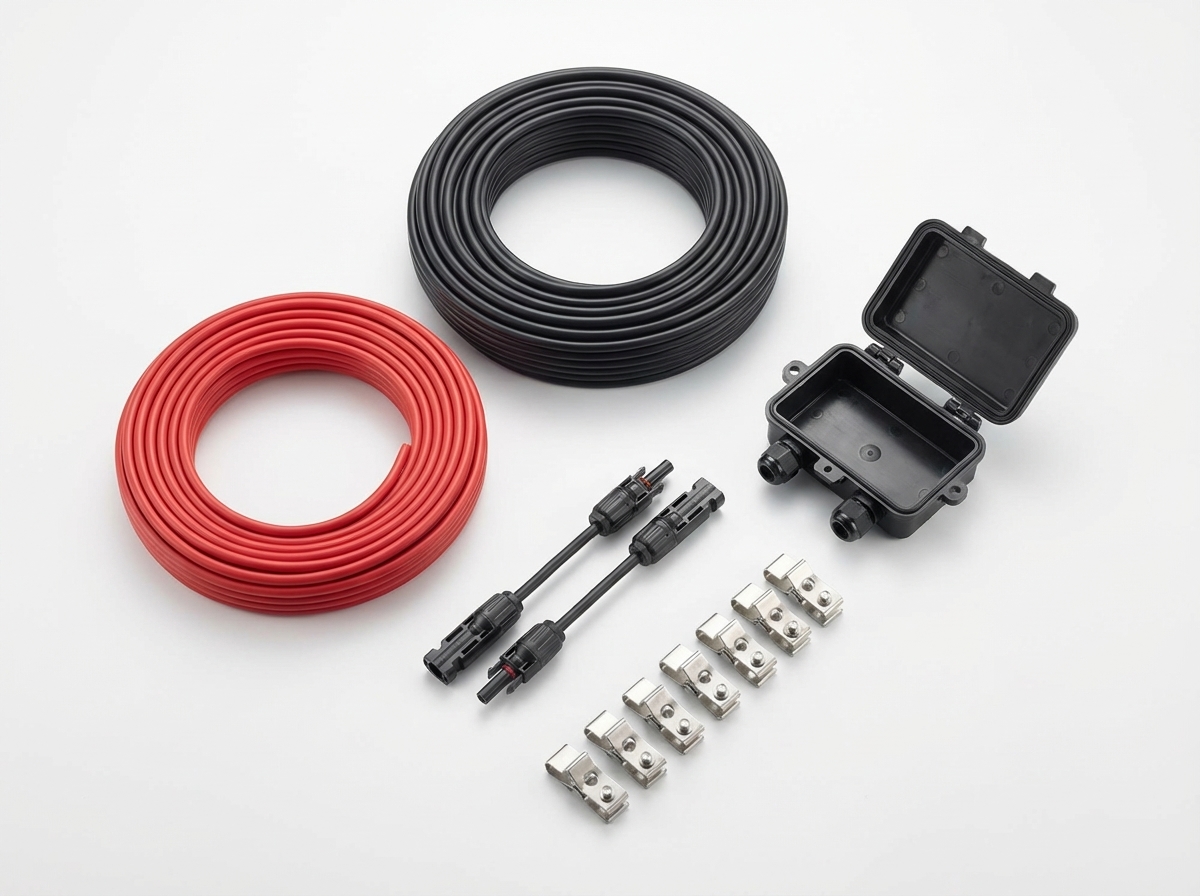
A DC isolator disconnects the PV string under load so an installer or firefighter can work on the system safely. Because it breaks DC arcs — which do not self-extinguish like AC — an undersized or mis-specified isolator is one of the most common causes of rooftop solar fires, and one of the most inspected components in AU and EU installations.
This guide covers the ratings that matter, the standards inspectors check, and how to specify isolators in a BOS RFQ so the delivered units match both the string design and the destination-market code.
The ratings that actually matter
Voltage: the isolator must be rated for the maximum string open-circuit voltage at the site minimum temperature — in practice 600V DC for small residential strings, 1000V DC for most rooftop projects and 1500V DC for commercial/utility designs. A 1000V-rated isolator on a 1500V string is a fire risk, not a saving.
Current and utilisation category: solar isolators are selected to IEC 60947-3 utilisation category DC-21B (switching resistive DC load including moderate overload) or the PV-specific DC-PV2. The rated current must exceed string Isc × 1.25; on multi-string isolators, check whether the rating applies per pole or per switched circuit, and whether poles must be series-linked to achieve the DC voltage rating.
Environment: rooftop isolators need IP66 enclosures with UV-stable materials and cable glands installed to maintain the rating — water ingress through poorly fitted glands is the classic failure mode found in AU inspection campaigns.
- Voltage rating ≥ string Voc at minimum site temperature (600V / 1000V / 1500V classes)
- Utilisation category DC-21B or DC-PV2 to IEC 60947-3
- Current rating ≥ 1.25 × Isc, checked per switched circuit
- IP66 + UV-stable enclosure for rooftop mounting
Where isolators are required — and where rules changed
Australia: AS/NZS 5033:2021 removed the blanket rooftop-isolator mandate that made AU famous for panel-adjacent isolators, but a PV array DC isolator at the inverter remains required, and rooftop units are still specified on many projects. Isolators must carry RCM marking and AS 60947.3 compliance.
EU: IEC 60364-7-712 requires a DC disconnector accessible to maintenance personnel; most inverters integrate a DC switch, so external isolators are specified where the inverter is remote from the array or local rules require a separate device.
USA: NEC uses a different architecture — rapid shutdown (NEC 690.12) and a DC disconnect at the inverter; standalone rooftop DC isolators in the AU style are not the norm. Confirm the architecture before copying a spec across markets.
What to put in the RFQ
Specify: rated DC voltage class, number of poles and internal linking, rated current per circuit at DC-21B/DC-PV2, IP rating and enclosure material, gland plate or pre-fitted glands, mounting style, required certificates (AS 60947.3 + RCM, IEC 60947-3 CB report, TÜV), and destination country. Ask for the derating curve at 60°C ambient — rooftop enclosures run hot, and the 40°C catalogue rating is not the operating rating.
Procurement decision table
| Decision area | Buyer question | Procurement check | Risk control |
|---|---|---|---|
| Product scope | Which product families does this cover? | DC Protection, Combiner Boxes, Connectors | Using an AC-rated switch on a DC string |
| Specification input | What must be stated before comparing quotes? | Maximum string Voc at site minimum temperature | Use the same specification wording across supplier quotes. |
| Commercial input | What makes the quote operationally useful? | Voltage class: 600V / 1000V / 1500V DC | Tie quantity, packing and destination to the same RFQ line. |
| Quality gate | What should be checked before shipment? | DC Protection Selection Guide | Reading the per-pole rating as the circuit rating on multi-string isolators |
BOM and RFQ context
DC Isolator Switch for Solar: Selection Guide — Ratings, Standards & RFQ Checklist is most useful when it is read as a sourcing decision, not only an informational article. The affected product scope normally includes DC Protection, Combiner Boxes, Connectors, PV Cables. A buyer should connect the answer to a live BOM, because cable size, connector rating, protection device choice, box configuration, storage accessories and export packing can change together.
For a procurement guide, the goal is to turn a broad buying question into a repeatable RFQ structure. The buyer should leave with the required product family, specification fields, quality checks and internal links needed to continue into the central products hub. In an RFQ, the minimum inputs should include Maximum string Voc at site minimum temperature, Voltage class: 600V / 1000V / 1500V DC, Rated current per circuit at DC-21B or DC-PV2, Poles and series-linking arrangement. These inputs let a sourcing team compare suppliers on the same basis instead of only comparing unit price.
The related follow-up content is DC Protection Selection Guide, Combiner Box Selection Guide, BOS 1500V Selection Guide. Use those pages to validate standards, sizing, inspection and packing before sending a final quote request. The main risk to avoid is: Using an AC-rated switch on a DC string Reading the per-pole rating as the circuit rating on multi-string isolators
FAQ
What is the difference between a DC isolator and a circuit breaker?
An isolator (disconnector) provides a visible, lockable break for safe maintenance and is manually operated; it does not trip on fault current. A DC breaker adds automatic overcurrent protection. Many solar designs use fuses in the combiner box for overcurrent protection and an isolator for disconnection — the two functions are specified separately.
Do I need a 1000V or 1500V DC isolator?
Match the isolator voltage class to the maximum string open-circuit voltage corrected to the site minimum temperature. Residential strings usually stay under 600V, commercial rooftop designs typically run up to 1000V, and utility-scale or modern C&I designs at 1500V need a genuine 1500V DC-rated device — often achieved by series-linking poles, which must be stated on the nameplate.
Are rooftop DC isolators still required in Australia?
AS/NZS 5033:2021 removed the mandatory rooftop (array-adjacent) isolator requirement, but a load-breaking DC isolator at the inverter is still required, and many networks, insurers and EPC specifications continue to include rooftop units. Check the contract spec — and if rooftop units are included, insist on IP66 with properly installed glands.