A trial order — also called a first order or sample order — is the standard way to qualify a new Chinese BOS supplier before committing to container quantities. It reduces risk on both sides: the buyer confirms the product quality and supplier reliability; the supplier confirms the buyer is serious and operationally capable.
A well-structured trial order is not just about receiving product and checking if it looks right. It is a systematic evaluation of product specification compliance, packaging quality, documentation accuracy and supplier communication responsiveness — because all of these affect your actual cost of doing business with the supplier.
What to include in a trial order
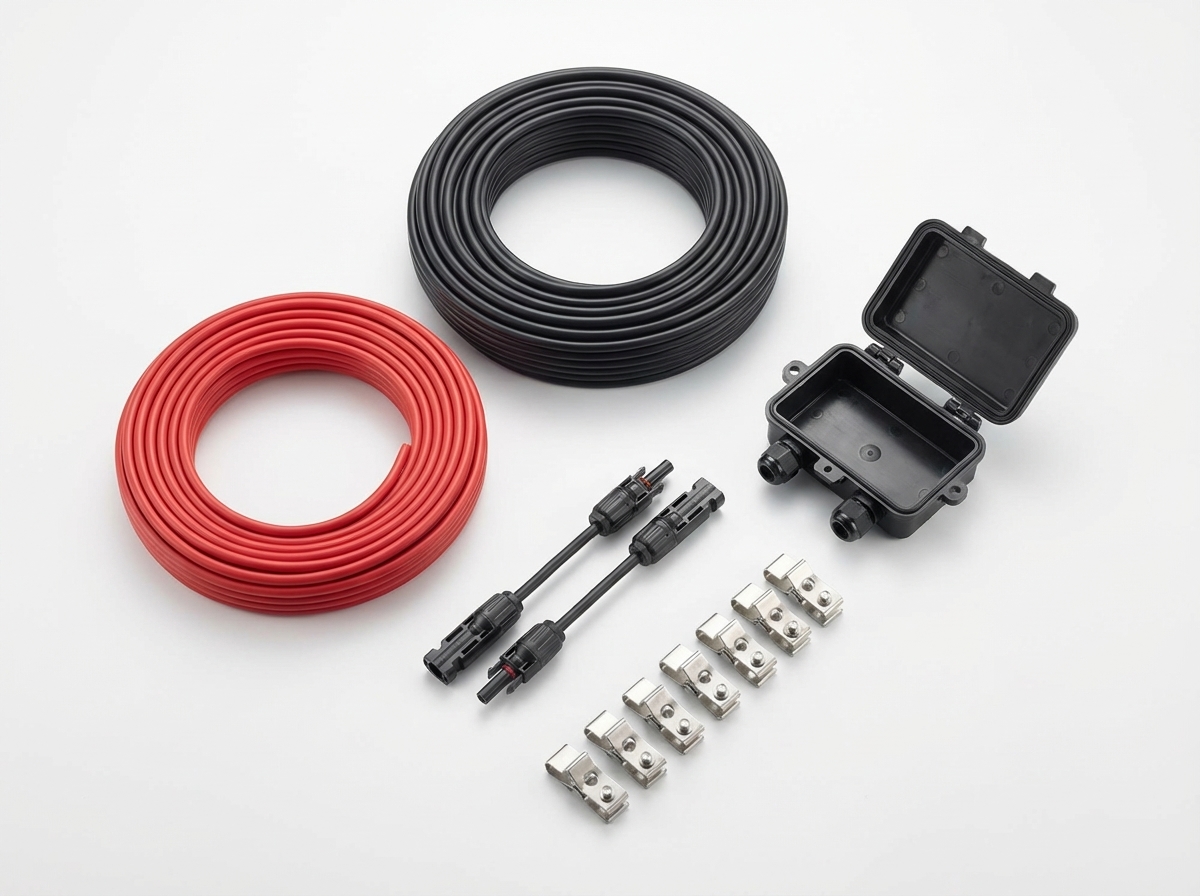
A trial order should cover enough product to allow meaningful testing but not so much that a quality problem creates a large write-off. For BOS components, one reel of each cable type, one bag of connectors, 5–10 units of each protection device, and 1–2 combiner boxes is a typical trial scope. That is enough to verify the specification, test the packaging, and check the documentation.
Include every product category you plan to buy commercially. If you intend to source cable, connectors and combiner boxes together, test all three in the trial. Discovering a problem with one category after you have already committed to commercial volumes on the others creates a difficult situation.
- Cover all product categories you intend to buy commercially
- Minimum 1 unit per product line — enough to test spec and packaging
- Include the full documentation set: TDS, test certificates, packing list
- Use the trial to evaluate supplier communication, not just product
What to test when the trial order arrives
Physical inspection: check that the product markings match the specification. Cable should show conductor cross-section, voltage rating and certification marks on the outer sheath. Connectors should have the rated current and IP rating marked or documented. Protection devices should have the rated voltage and current clearly marked and match the datasheet.
Dimensional check: measure the cable outer diameter and conductor cross-section if possible. Connectors should mate correctly with standard MC4 tooling. For combiner boxes, check that the fuse holder positions match the rated string count and that the busbar and SPD are correctly installed.
Documentation check: verify the test certificate is authentic by checking the certification body reference number. Compare the TDS data (voltage rating, current rating, temperature range) against your specification. Confirm the packing list matches what arrived.
- Check all product markings against the specification
- Verify certification marks and test the certificate reference number if possible
- Compare TDS data against your project specification
- Check that connector mating geometry is compatible with your existing equipment
- Photograph any discrepancies before raising them with the supplier
How to evaluate supplier performance during the trial
Product quality is only part of what you are evaluating. Supplier communication quality matters just as much for a long-term relationship. Key signals: Did the supplier respond to specification questions with accurate technical information, or with generic claims? Did the pre-shipment documentation match what arrived? Were the packing list and carton labels accurate?
A supplier who handles the trial order well — accurate documentation, responsive communication, quality consistent with samples — is a supplier you can scale with. A supplier who is difficult to communicate with at the trial stage will be more difficult at commercial volumes.
- Evaluate communication speed and technical accuracy, not just price
- Check that pre-shipment documentation matched what arrived
- Note packing quality — it predicts how commercial orders will arrive
- Assess how the supplier handles any problems or discrepancies
Moving from trial to commercial order
After a successful trial, the commercial order discussion changes. You have established product specification, documentation standards and communication expectations. The commercial order can reference the trial order specification directly, reducing the back-and-forth on technical details.
It is reasonable to negotiate pricing improvements at commercial volumes — a trial order is typically priced at or near the retail end of the supplier's range. Volume pricing, payment term improvements and packaging customization are all appropriate asks once the trial is complete and both sides are committed to the relationship.
- Reference the trial order specification in the commercial order
- Negotiate volume pricing based on the commercial quantity
- Discuss payment terms for the commercial order (T/T, LC)
- Confirm lead time for commercial quantities vs trial quantities
- Agree on a quality standard reference for the commercial order
Procurement decision table
| Decision area | Buyer question | Procurement check | Risk control |
|---|---|---|---|
| Product scope | Which product families does this cover? | PV Cables, Connectors, DC Protection | Ordering only one product category in the trial — test the full BOM |
| Specification input | What must be stated before comparing quotes? | Define which product categories you will include in the trial | Use the same specification wording across supplier quotes. |
| Commercial input | What makes the quote operationally useful? | Specify exact ratings and models for each line item | Tie quantity, packing and destination to the same RFQ line. |
| Quality gate | What should be checked before shipment? | Solar BOS Inspection Checklist | Accepting verbal quality assurances instead of documentation |
BOM and RFQ context
Solar BOS Trial Order from China: Step-by-Step Guide is most useful when it is read as a sourcing decision, not only an informational article. The affected product scope normally includes PV Cables, Connectors, DC Protection, Combiner Boxes. A buyer should connect the answer to a live BOM, because cable size, connector rating, protection device choice, box configuration, storage accessories and export packing can change together.
For a procurement guide, the goal is to turn a broad buying question into a repeatable RFQ structure. The buyer should leave with the required product family, specification fields, quality checks and internal links needed to continue into the central products hub. In an RFQ, the minimum inputs should include Define which product categories you will include in the trial, Specify exact ratings and models for each line item, Request TDS and test certificates with the trial order quote, Plan your inspection process before the trial arrives. These inputs let a sourcing team compare suppliers on the same basis instead of only comparing unit price.
The related follow-up content is Solar BOS Inspection Checklist, Solar BOS Packing & Labeling Guide, Incoterms for Solar BOS Imports. Use those pages to validate standards, sizing, inspection and packing before sending a final quote request. The main risk to avoid is: Ordering only one product category in the trial — test the full BOM Accepting verbal quality assurances instead of documentation