Solar installers are among the most practical buyers in the supply chain. They know exactly what they need — the cable runs, the connector types, the protection device ratings, the combiner box string count — because they have installed these products before or are reading a specific design. What they often don't know is how to replicate their current BOS procurement at lower cost by sourcing directly from China.
The barrier is usually perceived complexity: import documentation, minimum orders, quality uncertainty, and the risk of getting the wrong product. In practice, these barriers are smaller than they appear for buyers who approach the process systematically.
What BOS products installers typically source
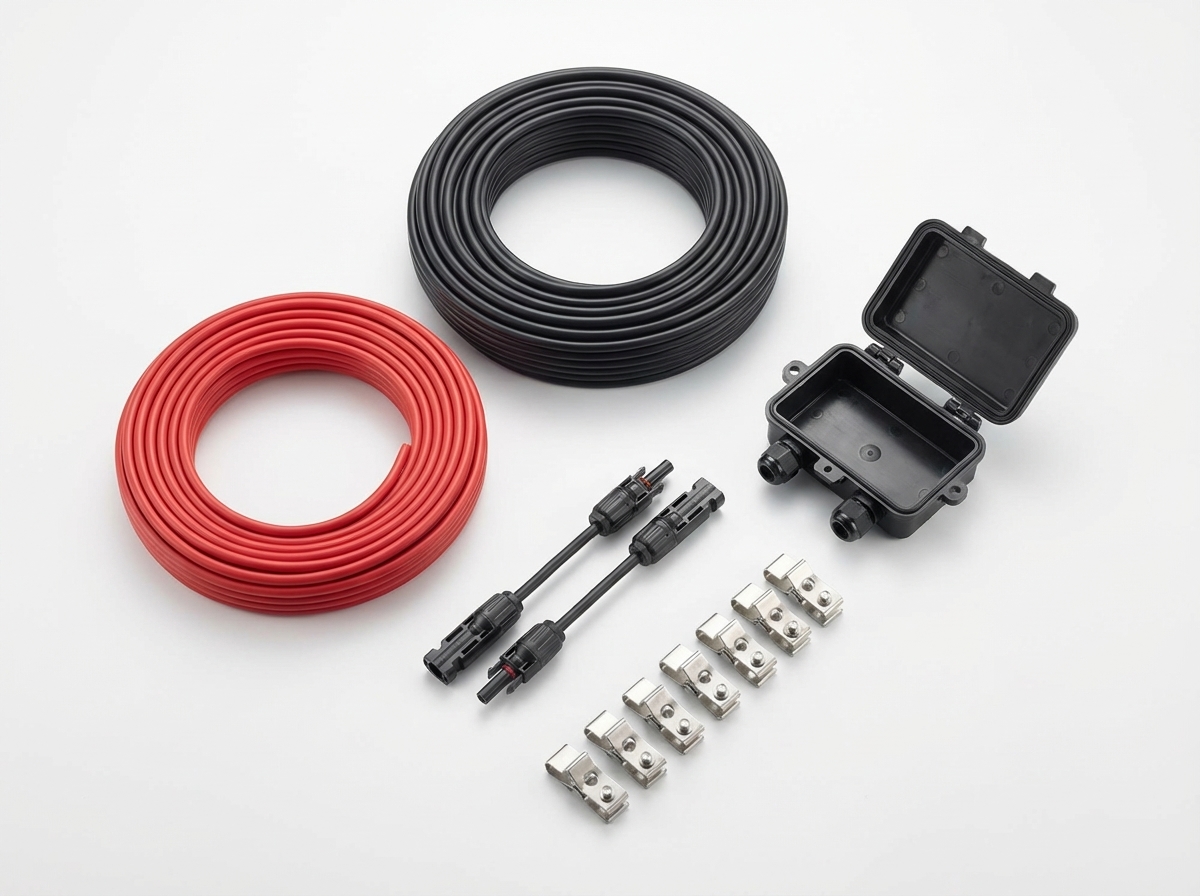
A typical installer BOS order covers: PV cable (by reel length and cross-section), connectors (by type and quantity), DC protection devices (MCBs, fuses, SPDs matched to the inverter and string configuration), and combiner boxes (by string count and voltage). For larger commercial projects, AC protection and distribution boards are added to the BOM.
Installers rarely need only one product category. The full BOS kit for a project is a natural multi-category order — which works in the installer's favor when sourcing from a supplier who stocks all categories.
- PV cable: matched to string length and cross-section requirements
- Connectors: MC4 or compatible, by pair count
- DC MCBs, MCCBs, fuses and SPDs: matched to system voltage and string current
- Combiner boxes: by string count, 1000V or 1500V rated
- AC protection and distribution boards: for inverter AC output circuits
How the sourcing process works for installers
Most installer sourcing from China starts with a BOM review. The installer sends the project BOM — or a standard kit list for their typical project size — and the supplier checks product availability, certifications and pricing. Lead time for stocked products is typically 2–4 weeks for small quantities; larger orders may require 4–6 weeks.
First-time buyers usually start with a sample order to verify product quality and packaging before committing to a container. Experienced importers often move directly to a partial container for a project batch. The practical minimum for cost-effective direct import is roughly a partial 20ft container, though this varies by product mix and destination.
- Step 1: Send full BOM with ratings, quantities and destination
- Step 2: Receive quote with product specs, certifications and lead time
- Step 3: Confirm sample or commercial order and payment terms
- Step 4: Pre-shipment quality inspection and photo documentation
- Step 5: Shipping and customs clearance at destination port
Certifications that matter for installer markets
The certification requirements for BOS components vary by market. Australian installers need products that comply with AS/NZS standards; European installers need CE marking and often TÜV certification for PV-specific products; US installers need UL listings for grid-connected applications.
Certification is one of the most important things to specify upfront. A product that looks correct but lacks the local market certification cannot be legally installed in most jurisdictions. OmniSol can confirm certification availability per product and market before the order is confirmed.
- Australia: AS/NZS compliance, TÜV-tested cable common
- Europe: CE marking, EN 50618 for PV cable, TÜV for connectors
- USA: UL listed products for grid-connected systems
- Middle East / Africa: IEC-based standards, confirm per project
- Always request the actual test certificate, not just the logo on the product
Managing quality and risk on direct imports
The main quality concern for installers is receiving a product that looks correct but performs differently from the specification — wrong insulation material, lower-rated conductors, mismatched connector internal geometry. These failures often don't show up until installation or, worse, in service.
Pre-shipment inspection, photo documentation and requesting TDS (technical data sheets) for each product line are the standard risk mitigations. Established suppliers will provide inspection photos and loading records as a matter of course. If a supplier resists documentation requests, that is a meaningful signal.
- Request technical data sheets (TDS) for each product line
- Ask for pre-shipment inspection photos by carton and by pallet
- Verify the actual certification documents, not just markings on the product
- Start with a sample order before committing to full commercial quantities
- Confirm packing list matches BOM before approving shipment
Procurement decision table
| Decision area | Buyer question | Procurement check | Risk control |
|---|---|---|---|
| Product scope | Which product families does this cover? | PV Cables, Connectors, DC Protection | Sourcing BOS components from multiple suppliers without coordinating shipping |
| Specification input | What must be stated before comparing quotes? | Prepare a full project BOM with ratings, cross-sections and quantities | Use the same specification wording across supplier quotes. |
| Commercial input | What makes the quote operationally useful? | List all required certifications per product and per destination market | Tie quantity, packing and destination to the same RFQ line. |
| Quality gate | What should be checked before shipment? | Solar BOS Packing & Labeling Guide | Ordering without specifying certifications — non-compliant product cannot be installed |
BOM and RFQ context
How Solar Installers Source BOS Components Directly from China is most useful when it is read as a sourcing decision, not only an informational article. The affected product scope normally includes PV Cables, Connectors, DC Protection, Combiner Boxes. A buyer should connect the answer to a live BOM, because cable size, connector rating, protection device choice, box configuration, storage accessories and export packing can change together.
For a procurement guide, the goal is to turn a broad buying question into a repeatable RFQ structure. The buyer should leave with the required product family, specification fields, quality checks and internal links needed to continue into the central products hub. In an RFQ, the minimum inputs should include Prepare a full project BOM with ratings, cross-sections and quantities, List all required certifications per product and per destination market, Decide on sample order vs direct commercial order, Confirm preferred shipping Incoterms (FOB or CIF). These inputs let a sourcing team compare suppliers on the same basis instead of only comparing unit price.
The related follow-up content is Solar BOS Packing & Labeling Guide, Solar BOS Inspection Checklist, MC4 Connector Compatibility Guide. Use those pages to validate standards, sizing, inspection and packing before sending a final quote request. The main risk to avoid is: Sourcing BOS components from multiple suppliers without coordinating shipping Ordering without specifying certifications — non-compliant product cannot be installed